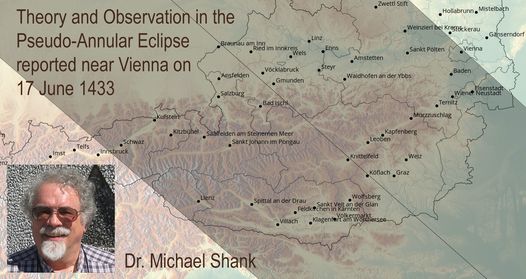
• Theory and Observation in the Pseudo-Annular Eclipse reported near Vienna on 17 June 1433

    Friday April 9, 2021, 7:00pm – UW Space Place

    This talk analyzes a solar eclipse that is described as annular, but that other reports and modern calculations show to have been very total. I explore the reasons for this odd state of affairs, since most eclipse observers are impressed by the darkness, not what’s happening immediately around the Sun. I argue that the report comes from a theoretically sophisticated observer with access to a 14th c. annular eclipse report that shaped his observation, which was then used to refute the concentric-sphere astronomy of al-Bitruji, an influential 12-13th century Arab astronomer.

    Michael H. Shank is Professor emeritus in the now-defunct Department of the History of Science at the UW-Madison, specializing in 14-15th-c. natural philosophy and astronomy. Most recently, he was Visiting Professor in the Department of History of Science at Tsinghua University (Beijing; fall 2017, fall 2019) and Visiting Fellow at the Institute for Advanced Study in the Humanities and Social Sciences, Zhejiang University (Hangzhou; fall 2018).

    The April meeting will be a virtual event, hosted with Zoom. Members will receive an email with a link and instructions to join a day or two before the event. Again this month we are opening the virtual meeting up to our followers who may want to join in. If you would like to attend the MAS virtual meeting, send an email to madisonastro.info@gmail.com by noon Friday, April 9 to let us know of your interest. We will email you the Zoom link at 3pm that day which will get you into the meeting by 7:30 on Friday evening.
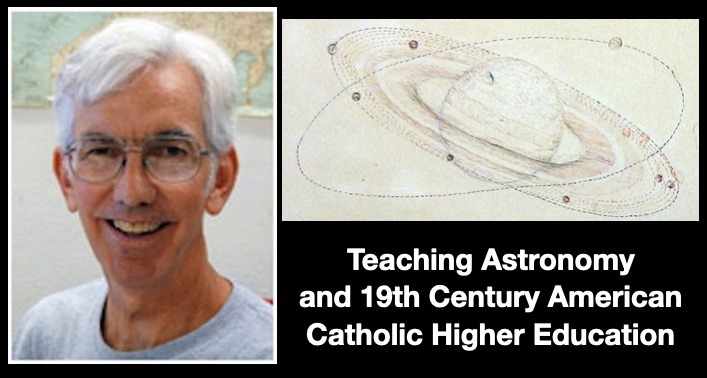
  • Teaching Astronomy and Nineteenth-century American Catholic Higher Education – a talk by Dana Freiburger

    Friday March 12, 2021, 7:00pm – UW Space Place

    Pretend it is 1815 and you are a student at Georgetown College in Washington, D.C., could you, with the aid of a terrestrial globe, determine the latitude and longitude of Washington City? Or maybe the more taxing problem to find the time of the sun’s rising and setting, and the length of the day and night at any place? These and over a hundred other problems awaited you in an 1812 book on the use of the globes and practical astronomy employed at this Jesuit college founded in 1789. Written by the Irish-born Jesuit James Wallace, this volume is one example of how the sciences like astronomy enjoyed a confirmed place in American Catholic colleges in the nineteenth century. My talk will explore this and two other later historical episodes to show how astronomy figured into Catholic higher education for students and their teachers alike.

    Dana A. Freiburger, Doctoral CandidateHistory of Science Program, UW-MadisonDana holds broad interests in histories of science and technology in the United States and Japan over the last two hundred years.

    He received a B.S. in Computer Science in 1979 and enjoyed a career in the computer industry until smitten by history of science. Dana escaped Silicon Valley and went on to earn masters degrees in history of science from the University of Oxford in 1999 and the University of Wisconsin-Madison in 2002 where he now works to finish his dissertation on the place of science in nineteenth-century American Catholic higher education; his talk today draws from that ongoing project.

    The March meeting will be a virtual event, hosted with Zoom. Members will receive an email with a link and instructions to join a day or two before the event. Again this month we are opening the virtual meeting up to our web followers who may want to join in. If you would like to attend the MAS virtual meeting, send an email to madisonastro.info@gmail.com by noon Friday, March 12 to let us know of your interest. We will email you the Zoom link at 3pm that day which will get you into the meeting by 7:30 on Friday evening.
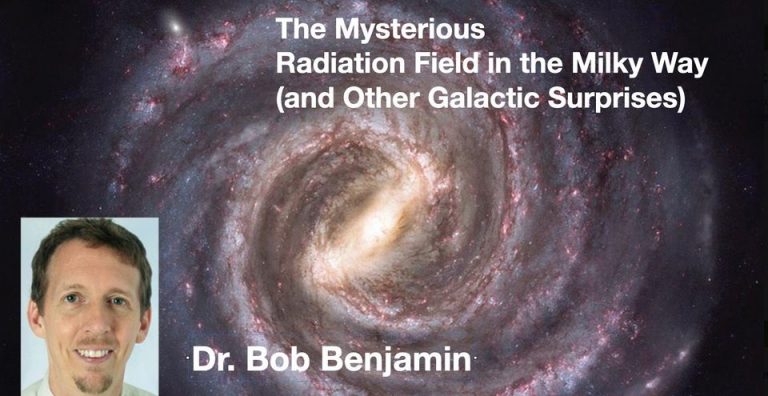
  • The Mysterious Radiation Field in the Milky Way (and Other Galactic Surprises)

    Friday February 12, 2021 – UW Space Place

    Our Milky Way Galaxy is an “island” of stars, interstellar gas, and dark matter in the vast expanses of intergalactic space. In this talk, I will focus on the interstellar (mostly hydrogen) gas. This gas fills the space between the stars, and some fraction of it is ionized: radiation from the stars has enough energy to remove the electron from the proton. By studying the resulting emission lines from this gas with the Wisconsin H-alpha Mapper, we have discovered that the central parts of the Milky Way are permeated by an unusual radiation field. I describe how we ended up making the discovery and why it is significant. As a bonus, I will describe the discovery of a thirty-degree arc of ionizing gas centered on the handle of the Big Dipper.

    Prof. Bob Benjamin obtained his Ph.D. at the University of Texas at Austin in 1994, and joined the physics faculty of the University of Wisconsin-Whitewater in 2003. He is interested in all things Milky Way, having participated in two major Wisconsin surveys of the Milky Way galaxy: the Wisconsin H-alpha Mapper and the NASA-sponsored Spitzer Space Telescope GLIMPSE survey of the galactic plane.

    The February 12th meeting will be a virtual event, hosted with Zoom. Members will receive an email with a link and instructions to join a day or two before the event. Again this month we are opening the virtual meeting up to our web followers who may want to join in. If you would like to attend the MAS virtual meeting, send an email to madisonastro.info@gmail.com by noon Friday, Feb 12 to let us know of your interest. We will email you the Zoom link at 3pm that day which will get you into the meeting by 7:30 on Friday evening.
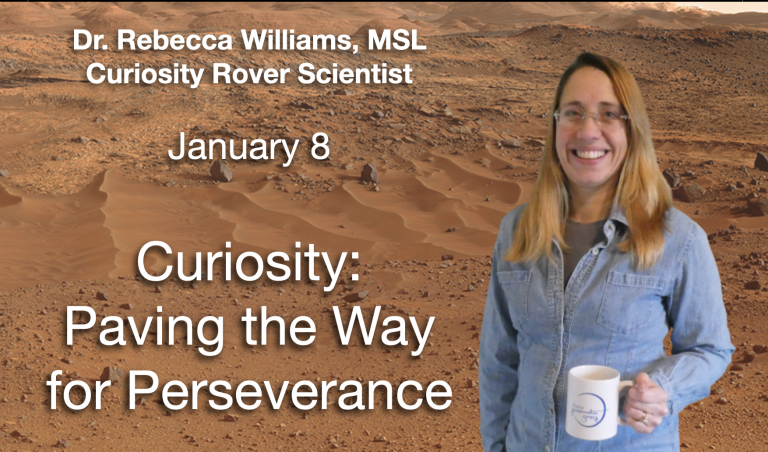
  • Curiosity Paving the Way for Perseverance

    Friday January 8, 2021, 7:00pm – UW Space Place

    Understanding the past habitable conditions on Mars is a primary scientific driver for NASA’s Curiosity rover. During the last eight years, Curiosity has traversed across diverse terrain within Gale crater and drilled the martian surface over two dozen times. Dr. Williams will provide an update on the latest scientific findings and share spectacular snapshots from along the rover’s journey. In addition, she will present an overview of NASA’s next robotic mission to Mars, Perseverance, which will land at Jezero crater in February 2021. 

    Rebecca M. E. Williams is a planetary geologist who studies the history of water on Mars through orbiter and rover observations in conjunction with field-based analog studies on Earth. The overarching objective in her research is to understand the role of water in shaping the surface of Mars through comparison with similar landforms on Earth. She has led fieldwork at sites in Utah, California, Australia, Patagonia, and the Atacama Desert in northern Chile to investigate river, lake and alluvial fan deposits. She was selected as a Participating Scientist on the Mars Science Laboratory Curiosity rover in 2011. She has served in the role of principal investigator in eleven NASA-funded projects and as a team member with the MOC, CTX and THEMIS VIS cameras on spacecraft orbiting Mars.

    Dr. Williams received her BA in physics and geology in 1995 from Franklin & Marshall College in Lancaster, Pennsylvania. In 2000, she earned her Ph.D. in planetary science from Washington University in St. Louis, Missouri. She was awarded the NASA Carl Sagan Fellowship for Early Career Researchers in 2006, and a 2017 Friend of Education by the Waunakee Teachers Association for her multi-year education and public outreach activities with students at all levels in the school district. Dr. Williams conducts research and rover operations from her home office in Waunakee, WI, where she lives with her husband and two daughters (8th & 12th grade).

    The January meeting will be a virtual event, hosted with Zoom. Members will receive an email with a link and instructions to join a day or two before the event. Again this month we are opening the virtual meeting up to nonmembers who may want to join in. If you would like to attend the MAS virtual meeting, send an email to madisonastro.info@gmail.com by noon Friday, Jan 8 to let us know of your interest. We will email you the Zoom link at 3pm that day which will get you into the meeting by 7:30 on Friday evening.
  • The Madison Astronomical Society’s Telescope Buying Clinic

    Friday December 11, 2020, 7:00pm – UW Space Place

    MAS’s annual telescope clinic is a chance for people in the Madison area to get their questions answered about telescopes and binoculars. It may also help you with some ideas for the gift-giving season.

    Do you have an old telescope that’s gathering dust because you don’t know how to use it?Or are you looking to buy a new one? Whatever the case, join us Friday online and learn something. MAS members will be on hand to answer your questions about your existing telescope or give you ideas for your next purchase.

    The December meeting will be a virtual event, hosted with Zoom. Members will receive an email with a link and instructions to join a day or two before the event.

    This month we are opening the virtual meeting up to non-MAS members who may want to attend the meeting. If you would like to attend the MAS virtual meeting, send an email to madisonastro.info@gmail.com by noon Friday, Dec 11 to let us know of your interest. We will email you the Zoom link at 3pm Friday, Dec 11 that will get you into the meeting by 7:30 on Friday evening.
  • Whispers from the Universe: Astronomy with Gravitational Waves

    Friday November 13, 2020, 7:00pm – UW Space Place

    Dr. Brady will talk about the generation of gravitational waves by colliding black holes and neutron stars, and how they are measured here on Earth using the LIGO detectors. He will tell the story of the first detection of gravitational waves in 2015, for which the Nobel Prize was awarded in 2017, through to the exciting observations that are becoming almost routine.

    Patrick Brady received his B.Sc. from University College Dublin in 1988 and a Ph.D. in Physics from the University of Alberta in 1994 where he studied with Werner Israel. He has held research positions at the University of Newcastle-upon-Tyne, Caltech, University of California, Santa Barbara. Since 1999, Brady has been at the University of Wisconsin-Milwaukee where he holds the rank of Professor and is Director of the Leonard E Parker Center for Gravitation, Cosmology, and Astrophysics. Brady has been a Research Corporation Cottrell Scholar, a Sloan Research Fellow, and was elected a Fellow of the American Physical Society in 2010. Brady is a Distinguished Visiting Research Chair at the Perimeter Institute for Theoretical Physics and currently serves as Spokesperson of the LIGO Scientific Collaboration. His research focuses on the analysis and interpretation of data from the worldwide network of gravitational-wave detectors.

    The November meeting will be a virtual event, hosted with Zoom. Members will receive an email with a link and instructions to join a day or two before the event.

  • Virtual Moon Over Monona Terrace

    Friday October 23, 2020, 7:30pm – 9:30pm – Virtual Event

    FREE Virtual Event

    Friday, October 23, 2020
    7:30 – 9:30PM


    Moon Over Monona Terrace is going virtual! Take a live guided tour of our Moon and other celestial objects in our solar system with members of the Madison Astronomical Society (MAS). Program Highlights:

    • Live Telescope Feed (weather permitting) – Explore the surface of the Moon and other celestial objects through telescopes provided by MAS members.
    • Sky Talk (planetarium simulation) – Explore the night sky and the wonders of astronomy, led by Geoff Holt, Planetarium Director, Madison Memorial H.S.
    • YouTube Channel (informational and educational videos) – Visit the Monona Terrace YouTube channel and select from several videos, presented by members of MAS, to enhance your event experience.

    Advanced registration is required through Eventbrite, and an event link will be emailed following registration. Prior installation of the Zoom application is recommended to participate.

    REGISTER VIA EVENTBRIGHT

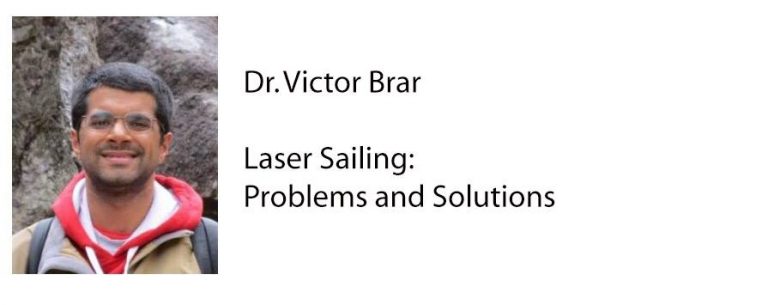
  • Interstellar laser-sailing: problems and solutions

    Friday October 9, 2020, 7:00pm – UW Space Place

    The October MAS meeting will be a virtual meeting hosted with Zoom.

    Speaker: Victor Brar, Van Vleck Assistant Professor of Physics, UW-Madison.

    In this talk Dr. Brar will summarize recent efforts that have been put into motion which aim to send spacecraft to Alpha Centauri at relativistic speeds, with a goal of receiving data back within our lifetimes. Those proposed missions hinge on developing laser sail technology, in which a high power (~100GW) laser propels a reflective spacecraft. He will discuss the stringent design parameters that the spacecraft must satisfy, and describe how those parameters can be achieved using recently developed ‘metasurface’ technology.

    Dr. Brar is a graduate of Middleton High School (class of 2000). He did his undergraduate work at MIT and received his Ph.D. in physics from UC Berkeley in 2010. He has been with the UW-Madison since 2016. Dr. Brar’s research aims to investigate and develop nano- and atomically-structured materials for the purpose of discovering new electronic phenomena, novel thermodynamic behavior, and new optical effects with broad device-level applications.

  • Copernicus: A Life on the Frontiers

    Friday September 11, 2020, 7:00pm – UW Space Place

    The September MAS meeting will be a virtual meeting hosted with Zoom.

    UW Madison emeritus professor of the history of science Dr. Michael Shank will present on “Copernicus: A Life on the Frontiers.”

    Description: An unexpected invitation to write a general-audience biography of Copernicus has forced this historian of medieval science to wrestle anew with the founding figure of the Scientific Revolution. I expected the assignment to be quick and easy. Instead, it has driven me back to the sources and completely changed my picture of the man. Copernicus was far more buffeted by Baltic politics and indebted to his late-medieval background than I had ever expected. In this talk, I emphasize his early life in a changing frontier context: the post-colonial political and economic turmoil of the southeastern Baltic frontier (13-15th c.), the astronomical excellence of the late-medieval University of Cracow, and the unsettled life of a prince-bishopric buffeted between the Prussia of the Teutonic Knights and the Kingdom of Poland during the emergent Reformation.

    Michael H. Shank is Professor emeritus in the now-defunct Department of the History of Science at the UW-Madison, specializing in 14-15th-c. natural philosophy and astronomy. Most recently, he was Visiting Professor in the Department of History of Science at Tsinghua University (Beijing; fall 2017, fall 2019) and Visiting Fellow at the Institute for Advanced Study in the Humanities and Social Sciences, Zhejiang University (Hangzhou; fall 2018).

    The September meeting will be a virtual event, hosted with Zoom. Members will receive an email with link and instructions to join a day or two before the event. Again this month we are opening the virtual meeting up to Facebook Group members who may want to join in. If you would like to attend the MAS virtual meeting, send an email to madisonastro.info@gmail.com by noon Friday Sept 11 to let us know of your interest. We will email you the Zoom link at 3pm Friday Sept 11 that will get you into the meeting at 7:30 on Friday evening.

  • A Brief History of Time(keeping): Optical atomic clocks and their applications

    Friday August 14, 2020, 7:00pm – UW Space Place

    At the August MAS meeting, our guest speaker will be Shimon Kolkowitz of the UW-Madison physics department (assistant professor). Due to COVID-19 restrictions, this meeting will again be held via Zoom.

    Optical atomic clocks are now the most stable and accurate timekeepers in the world, with fractional accuracies equivalent to neither losing nor gaining a second over the entire age of the universe. This unprecedented level of metrological precision offers sensitivity to new physics phenomena, opening the door to exciting and unusual applications. This talk will provide an introduction to how and why time is measured from a historical perspective, with an emphasis on the recent development of optical atomic clocks and their applications. I will discuss recent progress on pushing clocks to even greater levels of precision, as well as prospects for future improvement. Finally, I will give a brief overview of potential future applications of clocks, including gravitational wave detection, tests of general relativity, and searches for physics beyond the Standard Model.

    Shimon Kolkowitz is an assistant professor of physics at the University of Wisconsin – Madison, where his research is focused on experimental atomic physics and quantum science. He works on building novel and precise sensors to study fundamental physics and to develop new quantum technologies. Shimon received his B.S. from Stanford University, and his Ph.D. in physics from Harvard University, where his research focused on nanoscale sensing with quantum systems. He did his postdoctoral research on ultra-precise optical atomic clocks at NIST/CU Boulder, where he was a National Research Council postdoctoral fellow. He is the author of research articles published in Science, Nature, and Physical Review Letters amongst many other journals. Shimon was recently named a 2019 “Packard Fellow for Science and Engineering.”

    The August meeting will be a virtual event, hosted with Zoom. Members will receive an email with link and instructions to join a day or two before the event. Again this month we are opening the virtual meeting up to Facebook Group members who may want to join in. If you would like to attend the MAS virtual meeting, send an email to madisonastro.info@gmail.com by noon Friday August 14 to let us know of your interest. We will email you the Zoom link at 3pm Friday August 14 that will get you into the meeting at 7:30 on Friday evening.

    PHOTO CAPTION: “In the picture above, the glowing blue ball at the center of the round vacuum chamber window is a cloud of roughly 10 million strontium atoms cooled to one-thousandth of a degree above absolute zero and levitated in empty space by a combination of laser light and large magnetic field gradients. These atoms are the heart of the ultra-precise atomic clock being built in the Kolkowitz labs at the UW-Madison physics department.”