Friday, November 13, 2026, 7 pm, Memorial High School
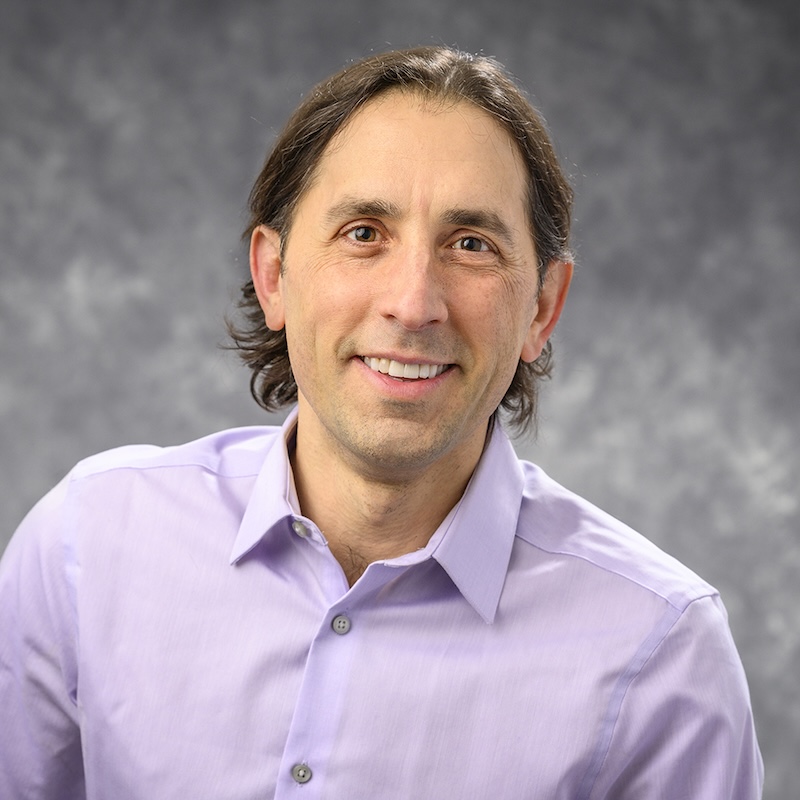
Dr. Stephen R. Meyers
Vilas Distinguished Professor of Geoscience at the University of Wisconsin-Madison
The long history of our planet provides a rich tapestry of boundary conditions and past ‘experiments’, which can be used to understand how the Earth System works and can inform decisions about our future. But how do we decode that history from a complex geological record?
In this presentation, I will discuss how quasiperiodic variations in Earth’s orbit and rotational axis (‘astronomical cycles’) can be used as a central framework to measure geologic time, reconstruct the behavior of the ancient Earth System, and test hypotheses about the behavior of the Solar System, over the past several billion years. Examples range from reconstructing early Earth-Moon history, to evaluating chaotic Solar System dynamics, and understanding the past and future of our planet’s polar ice sheets.
Dr. Stephen R. Meyers is a Vilas Distinguished Professor of Geoscience at the University of Wisconsin-Madison (USA), where he has developed a research, teaching and outreach program that addresses climate change, Earth System history, and Solar System evolution. His research is at the interface of sedimentary geology, geochemistry, statistics and astronomy, and he is also active in developing new approaches for science education that engage art-science collaboration.
Location: Theater 300, Memorial High School. Directions here.
This meeting will be live-streamed via our Youtube Channel.